
Few things are more terrifying for a motorist than seeing the temperature gauge soar or steam emerging from beneath the hood. An overheated car is a symptom that your engine is seriously stressed, not simply a minor annoyance. Whether it occurs during a long summer drive or in city traffic, understanding how to respond gracefully and properly can save you from expensive repairs and guarantee your safety on the road. In this blog, we’ll walk you through what to do when your car overheats, how to handle the problem properly, and how to take preventative measures to keep your vehicle operating smoothly.
What to Do When Your Car Overheats
- Turn Off the AC and Turn On the Heater: It may sound odd, but turning on the heater helps to remove excess heat from the engine. Turn off the air conditioner right away and adjust your heater to the highest temperature and fan setting.
- Pull Over Safely: As soon as it is safe, pull to the side of the road and turn off your engine. Driving while the car is overheated might seriously harm the engine.
- Wait for the Engine to Cool: Avoid opening the hood right away. Allow at least 15–30 minutes for the engine to cool. Opening it too soon may result in burns from steam or hot coolant.
- Check the Coolant Level: After the engine has cooled, carefully open the hood to examine the coolant reservoir. If it’s low, you can add coolant or, in an emergency, a 50/50 mixture of coolant and water. Cold water should not be added to a hot engine, as this can lead to cracking.
- Restart and Monitor: Once coolant has been added, restart the engine and observe the temperature gauge. You could slowly drive to a neighboring service station if everything returned to normal. If it overheats again, seek roadside assistance.
- Get the Cooling System Checked: Even if the temperature stabilizes, arrange an appointment with a mechanic as soon as possible. Overheating might indicate a more serious problem, such as a leaking radiator, a defective thermostat, or a broken water pump.
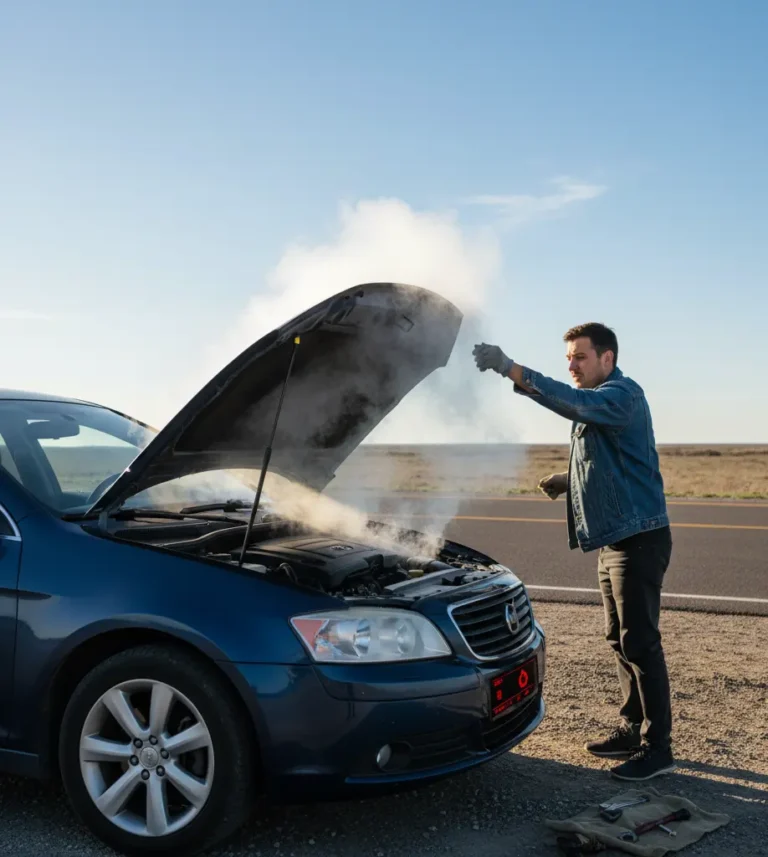
Immediate Actions to Do When Your Car Overheats
Pull Over Safely
- Move your vehicle to the side of the road or to a safe location immediately.
- Turn on your hazard lights to alert other drivers.
Turn Off the Engine
- Shutting down the engine prevents further heat buildup and potential severe damage.
Turn Off the AC and Turn On the Heater
- Switching off the AC reduces engine load.
- Turning on the heater helps draw heat away from the engine.
Wait for the Engine to Cool
- Allow at least 15–30 minutes for the engine to cool before attempting to check anything under the hood.
- Do not open the radiator cap while the engine is hot; hot coolant can cause burns.
Check Coolant and Oil Levels
- Once cooled, check the coolant reservoir and engine oil.
- If low, top up with the recommended fluids carefully.
Inspect for Leaks or Damage
- Look for obvious coolant leaks, broken hoses, or a malfunctioning radiator fan.
Restart the Car Carefully
- If everything looks normal and the coolant has been replenished, start the engine and monitor the temperature gauge.
- Drive slowly to a nearby mechanic if needed.
Call Roadside Assistance if Needed
- If the car continues to overheat or shows signs of major damage, don’t risk driving; call for professional help.
After the Car Has Cooled
Check Coolant Levels
- Open the coolant reservoir (never the radiator cap while hot) and check the fluid level.
- Top it up with the recommended coolant or a 50/50 mix of coolant and water if it’s low.
Inspect for Leaks or Damage
- Look for signs of coolant leaks, broken hoses, or cracks in the radiator.
- Check the engine oil level and its condition; overheating can sometimes affect oil viscosity.
Restart the Engine Carefully
- Start the engine and let it idle for a few minutes.
- Observe the temperature gauge closely to ensure it stays in the normal range.
Turn On the Heater for a Few Minutes
- This helps dissipate any remaining heat from the engine.
Drive Slowly and Avoid Heavy Traffic
- If the temperature is stable, drive to a nearby service station or mechanic at a reduced speed.
- Avoid aggressive acceleration or steep climbs until the engine is fully stable.
Monitor for Recurring Overheating
- If the engine temperature rises again quickly, turn off the car and call for roadside assistance; do not risk driving it.
Schedule a Full Mechanical Check
- Even if the car seems fine, overheating can damage components like the radiator, thermostat, water pump, or head gasket.
- Have a trusted mechanic inspect the cooling system thoroughly.
If the issue persists, seek professional help from the best car workshop in Dubai, such as Awtar Auto Repairing Garage.
Final Thoughts
Overheating can be frustrating, but understanding how to respond quickly and correctly can help you avoid major engine damage and protect your safety. By pulling over, turning off the engine, letting it cool, checking fluids, and watching the temperature carefully, you can handle the situation efficiently. Regular maintenance and attention to your cooling system can also help avoid future problems.
If the issue continues, it’s always recommended to look for expert assistance from the best automobile workshop in Dubai, such as Awtar Auto Repairing Garage, to guarantee your vehicle is properly examined and repaired. Taking prompt action and seeking professional guidance can save both your vehicle and your peace of mind.