
What is a Car Transmission Fluid?
Car transmission fluid is a tailored lubricant used in cars to guarantee that the transmission system, which transfers power from the engine to the wheels, runs smoothly and efficiently. Although its function and composition may differ slightly between automatic and manual transmissions, it is necessary for both.
Transmission fluid fulfills several vital functions:
- Lubrication: Minimize friction between moving parts within the transmission, preventing wear and tear.
- Cooling: Helps eliminate heat produced by friction and hydraulic pressure within the transmission.
- Hydraulic Function: It functions as a hydraulic fluid to facilitate seamless gear changes in automatic transmissions.
- Cleaning: Keeps metal surfaces clean by avoiding the accumulation of dirt and varnish.
- Protection: Prevents internal transmission components from rusting.
Does Changing Transmission Fluid Help Shifting
Yes, replacing your car’s transmission fluid can greatly enhance shifting, particularly if it’s old, filthy, or damaged. Here’s how and why it’s beneficial:
How Transmission Fluid Affects Shifting
- Lubrication: Fresh fluid lowers friction between gears and moving parts, resulting in smoother gear engagement.
- Hydraulic Pressure (Automatic Transmissions): In automatic transmissions, fluid operates as a hydraulic medium that regulates gear shifts. Old or low fluid can cause slow or rough shifting.
- Clutch and Band Function: Transmission fluid guarantees that clutches and bands engage correctly in automatic gearboxes. Slippage or difficult shifts may result from dirty fluid.
- Cooling: Fresh fluid aids in eliminating heat and preventing components from swelling or adhering due to overheating.
How Often to Change Transmission Fluid
Awtar Auto Repairing Garage, the best car workshop in Dubai, recommends changing your vehicle’s transmission fluid every 40,000-100,000 kilometers, depending on the type of transmission and operating circumstances. Regular maintenance and fluid changes guarantee smooth shifting and increase the life of your transmission.
How to Add Transmission Fluid
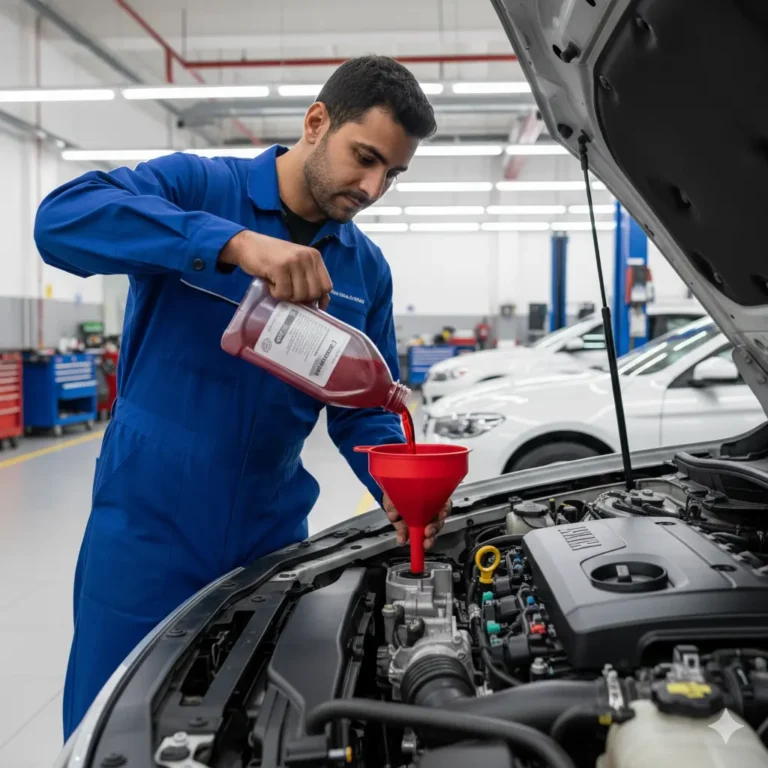
Before adding transmission fluid, warm up your vehicle and locate the transmission dipstick. Pour the suggested fluid carefully using a funnel in tiny amounts, checking the level often until it reaches the right mark. Always use the proper fluid type and prevent overfilling to maintain smooth shifting and transmission protection.
How to Check Automatic Transmission Fluid Level?
- Warm Up the Car: After starting your engine, let it a few minutes to idle. When testing ATF, most cars require the engine to be running.
- Locate the Transmission Dipstick: Open the hood and locate the dipstick, which is normally labeled or color-coded.
- Check the Level: Remove the dipstick, clean it thoroughly, reinsert it completely, and then remove it again. Fluid should appear between the “Full” and “Add” markings.
- Inspect the Fluid Condition: Healthy fluid is both clear and reddish. Dark, burnt-smelling, or gritty fluid means it may need a change.
- Add Fluid if Needed: Pour tiny amounts of the suggested ATF using a funnel, checking the level repeatedly until it is accurate.
How Often to Change Automatic Transmission Fluid?
- Typical interval: Every 40,000–100,000 km (25,000–62,000 miles), depending on vehicle type and driving conditions.
- Severe driving circumstances (high traffic, towing, or extreme temperatures) may necessitate more frequent replacements.
- Always adhere to your manufacturer’s recommendations for fluid type and service interval.
What is Automatic Transmission Fluid?
Automatic Transmission Fluid (ATF) is a specialized fluid used in automatic transmissions to maintain smooth operation and protect transmission components. Unlike engine oil, ATF is intended to serve as a hydraulic fluid that facilitates gear shifting in addition to lubricating.
Can I Drive with Low Transmission Fluid?
Driving with low transmission fluid can result in difficult shifting, overheating, and serious gearbox problems. Check fluid levels on a regular basis and top off with the proper type to guarantee smooth operation and avoid costly repairs.
What are the Symptoms of Low Transmission Fluid?
- Slipping Gears: The transmission may slip into and out of gear or hesitate while accelerating.
- Rough or Delayed Shifting: Gear changes may feel jerky, delayed, or harsh.
- Overheating Transmission: Low fluid causes the transmission to overheat by reducing cooling. You may notice a burning smell.
- Unusual Noises: Grinding, whining, or clunking sounds from the transmission.
- Fluid Leaks: Puddles or drips of reddish or brownish fluid under the vehicle.
- Warning Lights: The transmission or check engine light may come on.
- Poor Vehicle Performance: Reduced acceleration or difficulties driving the car smoothly.
What Happens if You Overfill Transmission Fluid
An excessive amount of transmission fluid in your car can lead to a number of problems that impair performance and eventually harm the transmission.
- Foaming and Air Bubbles: Moving parts cause excess fluid to churn, resulting in air bubbles. This impairs the fluid’s capacity to lubricate and cool the gearbox effectively.
- Overheating: Foamed fluid does not transmit heat adequately, resulting in overheating and potential internal damage.
- Hard or Erratic Shifting: The hydraulic pressure in the transmission becomes variable, resulting in harsh or delayed shifts.
- Leaking Seals and Gaskets: High fluid pressure can cause transmission seals or gaskets to break, resulting in leaks.
- Reduced Transmission Life: Continuous running with overfilled fluid can wear out internal components and reduce transmission lifespan.
Final Thought
Maintaining the proper transmission fluid level is critical for smooth performance, fuel efficiency, and the longevity of your vehicle. Awtar Auto Repairing Garage, the best Nissan workshop Dubai, is here to assist with any transmission-related tasks, including inspection, replacement, and diagnosis.
As specialists in Nissan Patrol maintenance and repair, our knowledgeable technicians make sure your car receives the exact attention it needs. Trust us to keep your transmission working smoothly and your drive trouble-free – because we understand what your Patrol needs to operate at its peak.
FAQs:
Is automatic and manual transmission fluid the same?
No, automatic and manual transmission fluids are not similar. Although they have similar functions (protection and lubrication), their formulations change greatly depending on the type of transmission. Using the incorrect fluid can cause major transmission issues since automatic and manual transmission fluids differ in composition, function, and viscosity.
When to change CVT transmission fluid?
Most vehicles with CVT transmissions should have the CVT fluid changed every 50,000 to 80,000 kilometers (30,000 to 50,000 miles). However, driving circumstances and the manufacturer’s advice will determine the precise interval.
Can changing transmission fluid be bad?
One of the greatest methods to maintain the health of your transmission is to change the fluid. Only when the system has been neglected for an extended period of time does it become dangerous.
How many kilometers to change transmission fluid?
Most vehicles require transmission fluid replacement every 40,000 to 100,000 kilometers, based on the type of transmission and operating circumstances.
Why is transmission fluid red?
Transmission fluid is red primarily for identifying and safety purposes, not performance. The red color is caused by dye injected during manufacturing, which allows drivers and technicians to identify it readily.