
Breathe Fresh Air: A Complete Guide on How to Clean Car AC Filters
Dubai’s roadways put every vehicle to the test. With frequent sandstorms, airborne dust, heavy traffic, and temperatures that routinely exceed 40°C, your car’s air conditioning system works harder than virtually anywhere else in the world. While most drivers concentrate on AC gas refills and cooling performance, one minor component frequently goes unnoticed: the cabin air filter.
The first line of defence against the fine sand, dust, pollen, and pollutants that are continuously present in Dubai’s atmosphere is this filter. Every time you switch on your AC, the cabin air filter assists in avoiding these contaminants from getting into the vehicle, guaranteeing cleaner air for you and your passengers.
However, as the filter accumulates more dirt over time, airflow becomes constricted, causing the AC system to work harder. The result can be weaker cooling, unpleasant odors, increased fuel consumption, and even costly repairs if left unchecked. Regular filter cleaning and replacement not only improve cabin air quality but also extend the life of your air conditioning system and save money on future repairs.
Whether you’re maintaining your vehicle yourself or visiting a trusted car workshop in Dubai, knowing how to clean and care for your car’s AC filter is an essential part of car ownership in the UAE’s challenging climate. In this guide, we’ll go over all you need to know about cleaning car AC filters, identifying signs of blockage, and determining when professional service is the best option.
Why You Need to Learn How to Clean Car AC Filters
In a place like Dubai, where vehicles are frequently exposed to dust, sand, and extreme temperatures, keeping your car’s AC filter clean is about far more than just comfort. A properly maintained cabin air filter has a direct impact on your health, driving enjoyment, and vehicle performance. Understanding how to clean car AC filters can assist you enjoy cleaner air, minimise maintenance costs, and keep your AC system functioning at peak efficiency.
Improved Air Purity: Eliminating Allergens, Spores, and Fine Desert Sand
Every time you drive, your vehicle passes outside air via the cabin filter before entering the passenger compartment. Dubai’s air frequently contains fine desert sand, dust particles, pollen, mold spores, and other airborne pollutants. When the filter is clean, it effectively traps these pollutants, helping to:
- Reduce allergy and asthma triggers.
- Minimize sneezing, coughing, and respiratory irritation.
- Prevent dust buildup inside the cabin.
- Create a fresher and more comfortable driving environment.
However, a blocked filter becomes ineffective and could potentially release stored pollutants back into the cabin. Regular cleaning ensures that you and your passengers breathe cleaner, healthier air on every journey.
AC System Longevity: Reduced Strain on the Blower Motor and Compressor
The entire air conditioning system must work harder to maintain the proper cabin temperature when a filthy filter inhibits airflow. This increased workload puts unnecessary stress on essential AC components.
Keeping the filter clean helps:
- Maintain proper airflow through the ventilation system.
- Reduce stress on the blower motor.
- Improve cooling performance during extreme heat.
- Minimize wear on the AC compressor and related components.
Over time, this preventative maintenance can help you avoid costly repairs and extend the life of your vehicle’s air conditioner. A basic filter cleaning program can save you a lot of money on maintenance over time.
Fuel Efficiency: A System That Breathes Easier Runs More Efficiently
Many drivers are unaware that a restricted air conditioning system might have an indirect effect on fuel usage. When airflow is blocked, the air conditioning system must function longer and work harder to cool the cabin effectively.
A clean filter allows air to circulate freely, which helps:
- Improve overall AC efficiency.
- Reduce unnecessary load on the engine.
- Achieve faster cabin cooling.
- Lower fuel consumption is associated with excessive AC operation.
Given Dubai’s environment, where air conditioning is frequently used all year round, even modest efficiency gains can eventually result in discernible fuel savings.
A Small Maintenance Task with Big Benefits
Learning how to clean car air conditioner filters is one of the most basic but most important maintenance activities for vehicle owners. Cleaner cabin air, more passenger comfort, longer-lasting AC components, and higher fuel economy all begin with a filter that can perform its function effectively. Maintaining this frequently disregarded part on a regular basis keeps your car and its occupants safe from Dubai’s harsh weather.
Signs It Is Time to Clean Car AC Filters
Before you start removing dashboard panels or opening the glove box to inspect the cabin air filter, your car will usually give you multiple warning indications that the filter is becoming blocked. Recognising these indications early will help you evaluate whether a filthy air filter is interfering with your air conditioner’s function and prevent extra strain on the system.
Weak Airflow Even at Maximum Fan Speed
One of the most obvious signs of a blocked cabin air filter is a noticeable decrease in airflow from the AC vents.
You may observe that:
- The air coming from the vents feels weaker than usual.
- The cabin takes much longer to cool down.
- Increasing the fan speed produces more noise but very little additional airflow.
- Certain vents seem to deliver less air than before.
As dust, sand, and debris accumulate in the filter medium, they generate resistance that limits the quantity of air that can move through the system. In dusty areas like Dubai, this accumulation can happen quickly, especially if you frequently drive through construction zones or during sandstorms.
Persistent Musty or Moldy Odors
A clean AC system should deliver fresh, odor-free air. If you notice an unpleasant odour whenever you turn on the air conditioning, the cabin air filter could be the culprit.
Common odors include:
- Damp or musty smells.
- Mold-like odors.
- Stale air that lingers inside the cabin.
- A dusty scent when the fan first starts.
Trapped moisture, dirt, and organic particles can eventually produce an environment conducive to the growth of mould and germs. These smells are transmitted straight into the cabin as air flows through the dirty filter. Cleaning or replacing the filter frequently restores fresh airflow and increases overall cabin comfort.
Unusual Humming or Whirring Sounds from the Fan
The blower motor must use more effort to force air through the ventilation system when a filthy filter obstructs airflow. Unusual sounds that weren’t there before may be produced by this extra strain. Listen for:
- A louder-than-normal humming sound.
- Continuous whirring noises from behind the dashboard.
- Fan noise that seems excessive compared to the amount of airflow produced.
- Struggling sounds when increasing fan speed.
These noises arise because the blower motor is working against greater resistance generated by a clogged filter. If this symptom is ignored for long, the blower motor and other AC parts may experience needless wear.
When Multiple Symptoms Appear Together
If you have insufficient airflow, foul odours, and increased fan noise all at once, your cabin air filter may need to be replaced right away. Cleaning or replacing the filter is often an easy and inexpensive way to enhance air quality, restore airflow, and increase the efficiency of your air conditioning system.
Before assuming a major AC problem, examine the cabin air filter as one of the initial diagnostic measures. For many common air conditioning issues, it is frequently the easiest solution.
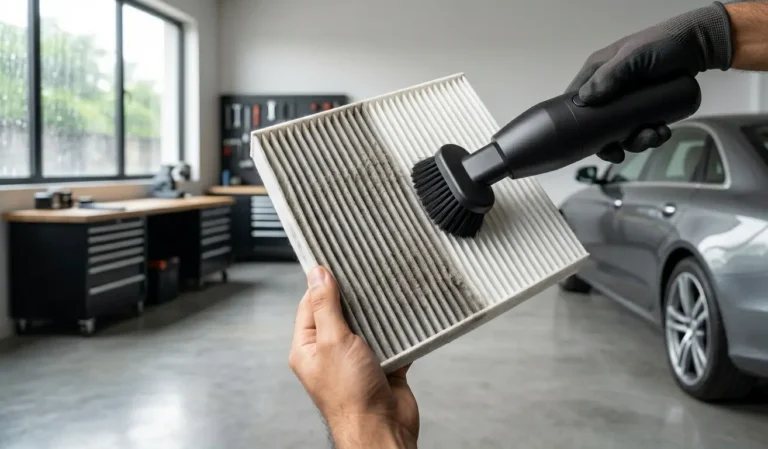
Tools Required to Clean Car AC Filters
- Screwdriver Set: Depending on your vehicle model, you may need to remove panels, clips, or the glove box to access the cabin air filter housing.
A basic screwdriver set can help with:
- Removing dashboard covers.
- Loosening filter housing screws.
- Accessing hidden mounting points.
- Reinstalling components securely after cleaning.
Both Phillips-head and flat-head screwdrivers are commonly required for different vehicle designs.
Vacuum Cleaner with Brush Attachment
A vacuum cleaner is one of the safest ways to remove loose dust, sand, and debris from the filter surface.
Benefits include:
- Removing fine desert sand without damaging the filter material.
- Cleaning dirt trapped between filter pleats.
- Preventing dust from spreading inside the vehicle.
- Reducing the risk of tearing delicate filter media.
Using a soft brush attachment helps lift debris while protecting the filter from unnecessary wear.
Soft Cleaning Brush
For stubborn dirt that a vacuum cannot fully remove, a soft-bristle brush can be very useful.
It helps:
- Loosen accumulated dust.
- Clean between filter folds.
- Remove debris from the filter housing.
- Reach corners and edges that are difficult to vacuum.
Avoid using hard or wire brushes, as they can damage the filter material and reduce its effectiveness.
Compressed Air (Optional)
Compressed air can be used to blow out fine dust particles trapped deep within the filter.
When using compressed air:
- Blow from the clean side toward the dirty side.
- Maintain a safe distance from the filter.
- Use moderate pressure to avoid damaging the filter fibers.
This tool is particularly useful in dusty regions where filters accumulate large amounts of fine sand and debris.
Microfiber Cloth
A clean microfiber cloth helps wipe dust from the filter housing and surrounding components before reinstallation.
Use it to:
- Clean the filter compartment.
- Remove loose dirt from nearby surfaces.
- Prevent debris from immediately contaminating the cleaned filter.
Protective Gloves
Although often overlooked, gloves are recommended when handling dirty cabin filters.
They help:
- Protect your hands from accumulated dust and allergens.
- Prevent contact with mold or bacteria that may have developed on the filter.
- Keep oils and dirt from your hands off the cleaned filter.
Step-by-Step Guide: How to Clean Car AC Filters Safely
Step 1: Locate and Access the Cabin Air Filter
In most modern vehicles, the cabin air filter is located behind the glovebox compartment on the passenger side.
To access it:
- Empty the contents of the glovebox.
- Open the glovebox fully.
- Locate the retaining tabs or side stoppers on both sides.
- Gently press the sides inward or release the retaining clips.
- Allow the glovebox to drop downward.
- Behind it, you will typically find a rectangular plastic housing door that covers the cabin air filter.
Some vehicles may require the removal of a few screws or clips, so consult your owner’s manual if the housing isn’t immediately visible.
Tip: Work carefully and avoid forcing plastic panels, especially in hot climates where components may become brittle over time.
Step 2: Note the Airflow Direction Before Removal
Before sliding the filter out, take a moment to examine its frame carefully.
Most cabin air filters have a printed arrow labeled:
- “Air Flow”
- “Airflow Direction”
- Or simply an arrow symbol
This arrow indicates the direction that air moves through the filter and is critical for proper installation.
Before removing the filter:
- Take a photo with your phone.
- Make a note of the arrow’s orientation.
- Observe whether the arrow points upward, downward, or toward the rear of the vehicle.
Installing the filter backward can reduce filtration efficiency and negatively affect airflow, so this small step can save time and frustration during reassembly.
Step 3: Shake Off Debris and Vacuum the Filter
Once removed, inspect the filter under good lighting.
You may notice:
- Dust accumulation.
- Fine desert sand.
- Leaves and small debris.
- Darkened pleats caused by trapped contaminants.
To clean it:
- Take the filter outdoors.
- Gently shake it to dislodge loose dirt and debris.
- Use a vacuum cleaner with a soft brush attachment.
- Carefully run the brush along the filter pleats.
- Vacuum both sides without applying excessive pressure.
Avoid:
- Scrubbing aggressively.
- Bending the filter excessively.
- Using sharp tools to remove trapped debris.
The goal is to remove accumulated particles while preserving the filter’s structure.
Step 4: Understand Whether the Filter Can Be Washed
This is the most important step, as not all cabin air filters are designed to be cleaned with water.
Paper Filters: Replace, Don’t Wash
Most standard cabin air filters use paper or cellulose-based filtration media.
These filters:
- Are designed for single-use operation.
- Can weaken when exposed to water.
- Lose filtration efficiency after washing.
- Should be replaced if heavily contaminated.
If your filter feels like thick paper or cardboard, cleaning should be limited to light vacuuming only. Once excessively dirty, replacement is the safest option.
Synthetic Mesh Filters: Washable and Reusable
Some premium or aftermarket filters use synthetic mesh materials that are specifically designed for cleaning and reuse.
For washable filters:
- Rinse gently with clean water.
- Use mild soap if recommended by the manufacturer.
- Remove trapped dirt without excessive scrubbing.
- Thoroughly rinse away any residue.
- Allow the filter to air-dry completely before reinstalling.
Never reinstall a damp filter. Moisture trapped inside the HVAC system can encourage mold, mildew, and unpleasant odors.
Common Mistakes to Avoid When Cleaning Car AC Filters
Accidentally Washing a Non-Washable Paper Filter
One of the most common mistakes is assuming that all cabin air filters can be cleaned with water.
Most factory-installed filters are made from paper or cellulose-based materials that are designed for single use. When these filters become wet:
- The filtration media can weaken and tear.
- Airflow may become restricted.
- The filter may lose its ability to trap dust and contaminants effectively.
- Structural damage can occur even after the filter dries.
Before using water, always check your vehicle manual or inspect the filter material. If the filter is paper-based and heavily contaminated, replacement is usually the safest and most effective solution.
Reinstalling a Damp Filter
Even if your vehicle uses a washable synthetic filter, reinstalling it before it is completely dry can create serious problems inside the HVAC system.
A damp filter can:
- Encourage mold and mildew growth.
- Create persistent musty odors inside the cabin.
- Promote bacterial buildup within the ventilation system.
- Reduce overall air quality for passengers.
Since the filter housing is a dark, enclosed space with limited airflow, moisture can remain trapped for extended periods. Always allow a washable filter to air-dry completely before putting it back into the vehicle.
Installing the Filter Backward
Many vehicle owners overlook the airflow arrow printed on the filter frame during reinstallation.
The filter is designed to work with air moving in a specific direction. Installing it backward can:
- Restrict airflow through the AC system.
- Reduce filtration efficiency.
- Place additional strain on the blower motor.
- Affect cooling performance and cabin comfort.
Before removing the filter, always note the airflow direction or take a quick photo for reference. When reinstalling, ensure the airflow arrow points exactly as it did originally.
Using Excessive Force During Cleaning
Aggressively brushing, shaking, or blowing compressed air directly onto the filter can damage the delicate pleats and filtration material.
Instead:
- Use a soft brush attachment.
- Apply gentle vacuum pressure.
- Handle the filter carefully during inspection and cleaning.
Damaged filter media cannot effectively trap dust, pollen, and fine desert sand, reducing their protective function.
Ignoring Signs That Replacement Is Necessary
Cleaning can extend the life of some filters, but not indefinitely. If the filter shows signs of:
- Heavy discoloration.
- Tears or cracks.
- Persistent odors after cleaning.
- Excessive debris buildup.
Replacement is often more effective than attempting another cleaning cycle. Continuing to use a severely clogged filter can compromise both air quality and AC performance.
When to Skip DIY and Visit a Car AC Repair Specialist in Dubai
Cleaning the cabin air filter can improve airflow and air quality, but some AC issues necessitate professional assistance. If you detect any of the following concerns, you should contact a car AC repair specialist in Dubai.
AC Blows Warm Air Despite a Clean Filter
If your filter is spotless but the AC still isn’t cooling properly, the issue may be:
- Low refrigerant levels
- A refrigerant leak
- A faulty compressor
- Other AC system component failures
A clean filter cannot fix cooling-related problems.
Rattling or Clicking Noises
Unusual noises coming from beneath the hood, like grinding, clicking, or rattling, frequently point to technical problems with the AC system. Ignoring these sounds may result in more involved and expensive repairs.
Refrigerant Leaks or Wet Passenger Carpet
Refrigerant leaks, greasy residue, or water pooling on the front passenger-side carpet may indicate a clogged drain line or an air conditioning system leak. These problems need to be diagnosed and fixed by professionals.
Know When to Call the Experts
While filter cleaning is a simple DIY chore, issues with cooling performance, leaks, or mechanical noises should be addressed by a qualified car AC repair specialist in Dubai to avoid further damage and restore your AC system’s efficiency.
Awtar Garage: Your Expert Car AC Repair Specialist in Dubai
When a simple filter cleaning isn’t enough to restore your air conditioner’s effectiveness, it’s time to call in the specialists. At Awtar Garage, we specialise in car air conditioning repair in Dubai, assisting drivers to stay cool even during the city’s hottest months.
Our skilled specialists employ cutting-edge diagnostic tools to find and fix a variety of AC problems, such as:
- Weak or warm airflow
- Refrigerant leaks
- Faulty compressors
- Unusual AC noises
- Blocked evaporator drains
- Blower motor and electrical faults
Whether your car needs routine AC maintenance or a full system repair, our team offers dependable solutions that restore cooling efficiency and extend the life of your air conditioning system.
As a trusted provider of car AC repair in Dubai, Awtar Auto Repairing Garage is dedicated to providing quality workmanship, transparent service, and fast turnaround times. We make sure your car stays cool, comfortable, and prepared for Dubai’s harsh driving conditions with everything from filter inspections to intricate AC diagnostics. Visit Awtar Garage today and let our specialists keep your car’s air conditioning system working at its best.