
Common Honda Accord Engine Issues
The Honda Accord has long been praised for its dependability, fuel efficiency, and smooth performance—but, like any vehicle, it is not without mechanical issues. Numerous owners have complained about recurring problems over the years, which may affect the vehicle’s long-term reliability, performance, and mileage. Understanding the most frequent Honda Accord engine issues can help you avoid unexpected repairs and keep your vehicle running smoothly. In this blog, we’ll go over the most common Honda Accord engine problems, why they happen, and how you can avoid them with regular maintenance.
Honda Accord Engine Overheating
Engine overheating is one of the more serious problems that Honda Accord owners may encounter, particularly in older models or vehicles with high mileage. This issue frequently arises when the cooling system is unable to control engine temperature efficiently. Low coolant levels, a broken thermostat, a clogged radiator, or a damaged water pump are common culprits. When any of these components fail to function properly, heat accumulates quickly, putting the engine at considerable risk.
Overheating not only reduces performance, but it can also cause serious long-term damage, such as bent cylinder heads, blown head gaskets, or full engine failure if not addressed. Early warning signs—such as rising temperature gauge readings, steam from the hood, or a sweet coolant odor—should never be ignored. Regular coolant checks, routine servicing, and rapid repair to leaks can help prevent the Honda Accord engine from overheating and keep your vehicle running efficiently.
Signs That Your Honda Accord Engine Is Overheating and What to Do?
Signs That Your Honda Accord Engine Is Overheating
Recognizing early indicators of engine overheating might help you avoid costly repairs. Here are the most common warning signals that Honda Accord drivers should look for:
- Rising Temperature Gauge: If the temperature needle moves into the red zone, it is one of the first and most obvious signs of overheating.
- Steam From Under the Hood: Seeing steam or smoke-like vapor is a strong sign that the coolant is boiling inside the engine.
- Strange Smells: A sweet, sugary odor often indicates leaking coolant, while a burning smell may signal overheating engine components.
- Dashboard Warning Lights: The engine temperature warning light or check engine light may turn on when the system detects abnormal heat levels.
- Reduced Engine Performance: Your Accord may feel sluggish, misfire, or lose power as the engine struggles to operate under excessive heat.
What To Do If Your Honda Accord Is Overheating
Taking the right steps can prevent severe engine damage:
- Pull Over Safely: If you discover signs of overheating, stop the car and turn off the engine to avoid further damage.
- Turn Off the A/C and Turn On the Heater: Switching off the air conditioning minimizes engine load, and turning on the heater assists in directing heat away from the engine temporarily.
- Open the Hood Carefully: Allow the engine to cool down. Never open the radiator cap while the engine is hot—it can cause serious burns.
- Check Coolant Levels: Once the engine has cooled, inspect the coolant reservoir. If it’s low, adding coolant may help temporarily—but this is not a permanent fix.
- Look for Visible Leaks or Broken Belts: Coolant leaks, loose hoses, or damaged belts can be common causes of overheating.
- Call for Professional Help: If the overheating continues or if you suspect major issues like a failing thermostat or water pump, it’s best to seek support from a certified mechanic.
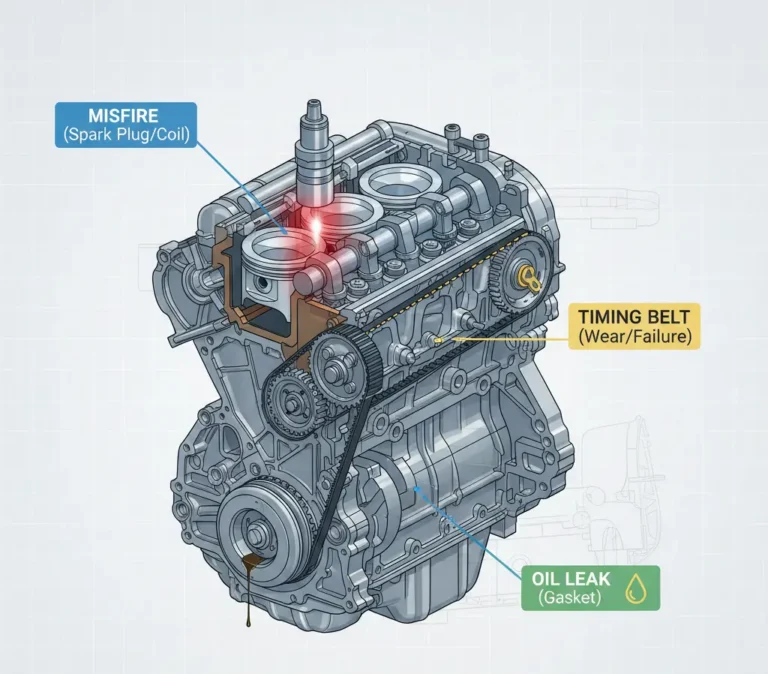
Honda Accord Engine Misfire
A Honda Accord engine misfire is a typical performance issue that can have a substantial impact on the vehicle’s smoothness, power, and fuel efficiency. An engine misfire happens when one or more cylinders fail to ignite the air-fuel mixture at the appropriate time. This disruption causes inconsistent engine functioning, noticeable vibrations, and diminished acceleration.
What Causes an Engine Misfire in a Honda Accord?
A Honda Accord engine misfire can occur for a variety of causes; the majority of them have to do with the ignition system, fuel supply, or engine airflow. Here are the most typical reasons:
- Worn or Faulty Spark Plugs: Spark plugs ignite the air–fuel mixture inside the cylinders. When they wear out or get fouled, the spark weakens or fails, resulting in incomplete combustion and misfires.
- Failing Ignition Coils: Ignition coils provide the high voltage spark required for combustion. A damaged or weak coil can cause misfires in certain cylinders, which frequently illuminate the check engine light.
- Clogged or Dirty Fuel Injectors: When injectors can’t deliver the right amount of fuel, cylinders may run lean (too little fuel), leading to misfires, hesitation, and poor performance.
- Vacuum Leaks: A crack or loose connection in vacuum hoses might allow unmetered air to enter the engine. The engine runs rough or misfires as a result of this disturbance of the air-fuel ratio.
- Low Fuel Pressure: A weak fuel pump, clogged fuel filter, or failing fuel pressure regulator can reduce fuel flow, making the engine misfire under load or during acceleration.
- Faulty EGR Valve (Exhaust Gas Recirculation): A stuck-open EGR valve can introduce too much exhaust gas into the intake, diluting the air–fuel mixture and causing misfires, especially at idle.
- Problems With Engine Timing: Issues with the timing chain, camshaft position sensor, or crankshaft position sensor can lead to incorrect timing, resulting in misfires or rough running.
- Carbon Buildup in the Intake or Valves: Older Honda Accord engines—especially those with direct injection—may develop carbon deposits that restrict airflow and lead to misfires over time.
- Faulty Oxygen Sensors: Bad O2 sensors send incorrect data to the ECU, causing the engine to adjust fuel incorrectly and potentially misfire.
How To Fix Engine Misfire Issues in a Honda Accord?
- Run a Diagnostic Scan: Start by scanning the car for error codes to determine whether the misfire is caused by ignition, fuel delivery, airflow, or sensor issues.
- Replace Worn Spark Plugs: Misfiring is frequently caused by damaged or worn spark plugs. Replacing these instantly restores smooth engine performance.
- Check and Replace Ignition Coils: Faulty ignition coils can trigger cylinder-specific misfires. Inspect and replace any coils showing signs of failure.
- Clean or Replace Clogged Fuel Injectors: Dirty injectors restrict fuel flow, leading to uneven combustion. Professional cleaning or replacement can resolve the issue.
- Inspect for Vacuum Leaks: Look for cracked hoses, loose connections, or damaged intake components. Fixing vacuum leaks helps restore proper air–fuel balance.
- Verify Fuel Pressure: Low fuel pressure from a weak pump or clogged filter can cause misfires during acceleration. Test the system and replace faulty parts.
- Check Timing and Sensors: Issues with the timing chain, camshaft sensor, or crankshaft sensor can interrupt proper engine timing. These require expert inspection.
- Visit a Professional Workshop: For complex or recurring misfires, consulting a trusted Car workshop in Dubai, like Awtar Auto Repairing Garage, ensures accurate diagnosis and expert repair.
Oil Leaks in Honda Accord Engines
Older Honda Accord vehicles frequently experience oil leaks, which are frequently brought on by worn-out gaskets, seals, or deteriorating engine parts. Over time, parts such as the valve cover gasket, oil pan gasket, camshaft seals, and crankshaft seals can fail, causing engine oil to seep out. In some circumstances, a malfunctioning VTEC solenoid gasket or a faulty oil filter can cause unexpected leaks. Low oil levels, which lower lubrication and raise the risk of engine wear or overheating, can result from even a tiny leak.
Drivers may notice symptoms such as oil patches under the car, a burning oil odor, smoke from the engine compartment, or frequent dips in oil level. Ignoring an oil leak can lead to severe engine damage if the oil level drops too low. Regular inspections, gasket replacement, and oil checks can help to avoid costly issues. Addressing oil leaks early ensures your Honda Accord engine remains safe, properly oiled, and operating smoothly.
Why is My Honda Accord Leaking Oil?
A Honda Accord can leak oil for a variety of causes, most of which are related to worn, broken, or old engine components. These are the most typical reasons:
- Worn Valve Cover Gasket: The valve cover gasket protects the engine’s top end. Over time, it becomes brittle and breaks, allowing oil to flow down the engine block.
- Damaged Oil Pan Gasket: The oil pan gasket, located near the engine’s bottom, is exposed to heat, pressure, and road debris. Oil starts to leak from the car’s undercarriage as it deteriorates.
- Faulty Camshaft or Crankshaft Seals: These seals stop oil from seeping around engine parts that rotate. If they deteriorate or crack, oil may spill from the engine’s front or rear.
- Failing VTEC Solenoid Gasket: Common in Honda engines, the VTEC solenoid gasket can harden with age, leading to leaks near the top or side of the engine.
- Loose or Faulty Oil Filter: If the oil filter isn’t tightened properly or has a damaged gasket, oil may leak shortly after an oil change.
- Oil Drain Plug Issues: A worn drain plug washer or a loosely installed plug can cause oil to drip from the bottom of the engine.
- High Engine Pressure: If the PCV (Positive Crankcase Ventilation) valve is clogged, engine pressure increases and forces oil out through weak seals.
- Overfilled Engine Oil: Adding too much oil can create excess pressure, causing leaks around gaskets and seals.
How to Fix Oil Leaks in a Honda Accord Engine?
Fixing oil leaks in a Honda Accord begins with locating the source of the leak and replacing any old or broken components. The essential steps are as follows:
- Inspect the Valve Cover Gasket: If the gasket is damaged or brittle, replacing it is frequently the quickest and most effective way to repair leaks near the top of the engine.
- Replace the Oil Pan Gasket: For leaks from underneath, the oil pan gasket may need to be removed and replaced. Lifting the car is typically necessary for appropriate access.
- Check Camshaft and Crankshaft Seals: These seals can wear out with age. If oil is leaking from the front or rear of the engine, the seals may need professional replacement.
- Fix VTEC Solenoid Gasket Leaks: A hardened or damaged VTEC solenoid gasket should be replaced to prevent leaks along the side or top of the engine.
- Tighten or Replace the Oil Filter: Ensure the oil filter is properly installed with a good gasket. If it’s faulty or loose, replacing it can stop fresh leaks.
- Inspect the Oil Drain Plug: Replace a worn drain plug washer or tighten the plug if it’s loose after an oil change.
- Check the PCV Valve: A clogged PCV valve can increase pressure in the engine, forcing oil out through weak seals. Replacing the valve helps restore proper ventilation.
- Clean the Engine Area: Cleaning off old oil residue helps identify new leaks and confirm that repairs are successful.
- Visit a Professional Mechanic: For complex leaks or seal replacements, getting help from the Best garage in Dubai ensures accurate diagnosis and long-lasting repairs.
Honda Accord Engine Stalling
Some Honda Accord owners may encounter the annoying and occasionally hazardous problem of engine stalling, particularly in older models or cars that haven’t had routine maintenance. Stalling happens when the engine unexpectedly turns off when idling, accelerating, or cruising, breaking the flow of power required to keep the vehicle running smoothly.
What Causes Engine Stalling in a Honda Accord?
Engine stalling in a Honda Accord can happen for several mechanical or electrical reasons. Below are the most common causes:
- Faulty Idle Air Control (IAC) Valve: The IAC valve regulates the amount of air entering the engine while idling. When it becomes dirty or fails, the engine struggles to maintain idle speed and may stall unexpectedly.
- Clogged Fuel Injectors: Dirty or partially blocked injectors restrict fuel flow, causing the engine to run lean and stall, especially at low speeds or during acceleration.
- Weak or Failing Fuel Pump: A pump that cannot deliver adequate fuel pressure can lead to sudden stalls, particularly under load or during highway driving.
- Bad Crankshaft Position Sensor: This sensor tracks engine rotation. If it fails, the ECU loses critical data, and the engine may shut off instantly.
- Faulty Mass Airflow (MAF) Sensor: A malfunctioning MAF sensor sends incorrect airflow readings, causing unstable fuel mixtures and engine stalling.
- Vacuum Leaks: Cracked or loose vacuum hoses disrupt the air–fuel balance, leading to rough idling and potential stalling.
- Dirty or Sticking Throttle Body: Carbon buildup prevents the throttle plate from opening correctly, restricting airflow and causing the engine to stall at idle.
- Ignition System Issues: Worn spark plugs, failing ignition coils, or a weak ignition control module can cause misfires that lead to stalling.
- Faulty EGR Valve: A stuck-open EGR valve introduces too much exhaust gas into the intake, causing the engine to choke and stall.
How to Fix Engine Stalling Issues in a Honda Accord?
Fixing engine stalling in a Honda Accord entails determining the underlying reason and repairing or replacing the afflicted components. The best steps are as follows:
- Clean or Replace the Idle Air Control (IAC) Valve: If the IAC valve is dusty or stuck, cleaning it can help restore proper airflow at idle. In order to avoid stalling, it is frequently required to repair a defective valve.
- Clean the Fuel Injectors: Use professional fuel injector cleaning or replace badly clogged injectors to ensure consistent fuel delivery and prevent lean conditions.
- Test and Replace a Weak Fuel Pump: Checking fuel pressure can reveal a failing pump. Replacing it ensures the engine receives the correct fuel supply during all driving conditions.
- Replace Faulty Sensors: A bad crankshaft position sensor or MAF sensor should be replaced immediately, as faulty readings can cause sudden engine shutdowns.
- Fix Vacuum Leaks: Inspect hoses for cracks, loose connections, or broken fittings. Replace damaged parts to stabilize the air–fuel mixture.
- Clean the Throttle Body: Remove carbon buildup to ensure the throttle plate opens and closes smoothly. This helps maintain a steady idle and prevents stalling.
- Repair Ignition System Problems: Replace worn spark plugs, malfunctioning ignition coils, or weak ignition modules to eliminate misfires that can lead to stalling.
- Inspect and Service the EGR Valve: If the EGR valve is stuck open, cleaning or replacing it can restore proper airflow and improve combustion stability.
- Perform a Full Diagnostic Scan: A scan tool can identify trouble codes that point directly to the source of the problem, saving time and preventing repeated stalling events.
Honda Accord Engine Timing Belt Issues
Timing belt troubles are among the most serious worries for Honda Accord owners, particularly in versions with belt-driven engines. The timing belt is essential for coordinating the crankshaft and camshaft’s rotation, which guarantees that engine valves open and close precisely. Significant issues with engine performance may arise when the timing belt starts to lose tension, wear out, or crack.
How to Tell If the Timing Belt Is Causing Engine Issues in a Honda Accord?
Recognizing early indicators of timing belt problems is critical, as a faulty belt can cause serious engine damage if neglected. Here are the primary symptoms that your Honda Accord’s timing belt could be the cause of engine problems:
- Ticking or Clicking Noise From the Engine: A worn timing belt frequently emits a regular ticking sound from the front of the engine. This occurs when the belt loses tension or starts to wear out.
- Engine Misfires: If the timing belt slips or stretches, it can cause the engine’s timing to fall out of sync, resulting in misfires, rough running, or poor acceleration.
- Difficulty Starting the Engine: Incorrect timing due to a failing belt can make the engine struggle to start or crank longer than usual.
- Engine Stalling or Shutting Off: A loose or damaged belt can momentarily disrupt valve timing, causing the engine to stall unexpectedly.
- Visible Wear or Cracks on the Belt: If inspected, a failing timing belt may show signs of fraying, cracking, glazing, or missing teeth.
- Oil Leaks Near the Timing Belt Cover: Leaking oil from the camshaft or crankshaft seals can soak the belt, accelerating wear and increasing the risk of failure.
- Check Engine Light: Although not always specific to the belt, incorrect timing may trigger the check engine light and store timing-related error codes.
- High Mileage Without Replacement: If your Accord has exceeded 60,000–100,000 miles without a timing belt change, the risk of belt wear or failure increases significantly.
Honda Accord Timing Belt Replacement: When Should You Replace It?
The timing belt is a key component that keeps your Honda Accord’s engine operating smoothly. Replacing it at the correct time is critical to preventing catastrophic engine damage. Most Honda Accord models recommend replacing the timing belt every 60,000 to 100,000 miles, depending on engine type and operating circumstances. It is also vital to evaluate engine age, obvious wear, and evidence of cracking or fraying on the belt.
Many mechanics advise changing related parts like the water pump, tensioners, and pulleys at the same time as the belt. This proactive strategy lowers the possibility of unplanned failures and guarantees long-term dependability.
If you’re unsure about the timing belt’s condition or replacement schedule, the best solution is to see a specialist. Visiting a reputable car workshop Dubai ensures that the timing belt is inspected, replaced, and properly tensioned by skilled technicians who use the necessary instruments and techniques.
Honda Accord Engine Compression Problems
Engine compression is required for optimal combustion and overall engine performance. Low or uneven compression in a Honda Accord can result in decreased power, poor fuel economy, harsh idling, and difficulties starting the engine. Compression issues occur when the cylinders fail to sustain the required pressure for optimal combustion.
What is Engine Compression and Why Does It Matter in a Honda Accord?
Engine compression refers to the pressure formed inside the cylinders as the piston compresses the air-fuel combination before ignition. Proper compression is required for efficient combustion, smooth engine operation, and maximum power output. In a Honda Accord, keeping proper compression ensures that the engine provides consistent acceleration, fuel efficiency, and longevity.
Low or uneven compression can lead to a variety of engine problems, including:
- Reduced Power and Performance: The engine struggles to produce enough force, resulting in sluggish acceleration.
- Poor Fuel Efficiency: Incomplete combustion wastes fuel, increasing consumption.
- Rough Idling and Misfires: Weak cylinder pressure can cause vibrations, stalling, or misfires.
- Increased Engine Wear: Consistently low compression puts extra strain on engine components, potentially causing long-term damage.
Regular maintenance, such as inspecting for worn piston rings, leaking head gaskets, and malfunctioning valves, is essential for maintaining engine compression. To put it briefly, adequate compression keeps your Honda Accord operating smoothly, effectively, and dependably when driving.
How to Check for Engine Compression Issues in a Honda Accord?
Determining if the cylinders are keeping the right pressure for effective combustion is made easier by checking engine compression. This is how it is carried out:
Gather the Necessary Tools
- Compression gauge
- Ratchet and socket set
- Spark plug socket
- Safety gloves and eyewear
Prepare the Engine
- Ensure the engine is warm but turned off.
- Disconnect the ignition coils or spark plug wires to prevent accidental starting.
- Remove all spark plugs from the cylinders.
Perform the Compression Test
- Attach the compression gauge to the spark plug hole of the first cylinder.
- Fully depress the accelerator pedal to allow maximum airflow.
- Crank the engine using the starter for several seconds (usually 4–5 revolutions) and note the reading on the gauge.
- Repeat the process for all cylinders.
Compare the Readings
- All cylinders should have compression readings within 10–15% of each other.
- Low compression in one or more cylinders indicates potential problems, such as worn piston rings, leaking valves, or a blown head gasket.
Perform a Wet Test (Optional)
- If low compression is detected, add a small amount of engine oil to the cylinder and repeat the test.
- If compression improves significantly, the piston rings are likely worn. If not, the issue may be with the valves or the head gasket.
Seek Professional Assistance
- Interpreting compression readings and diagnosing underlying issues can be complex.
- A qualified mechanic can provide an accurate diagnosis and recommend the best repair solution.
How to Prevent Engine Problems in a Honda Accord
Preventing engine problems is critical to maintaining your Honda Accord reliable, efficient, and long-lasting. Regular maintenance and responsible driving can make a significant difference. Here’s how to keep your engine safe:
Follow Scheduled Maintenance
- Stick to Honda’s recommended service intervals for oil changes, filter replacements, and major inspections.
- Regularly check and replace spark plugs, belts, and hoses as needed.
Use High-Quality Fluids
- Always use the manufacturer-recommended engine oil, coolant, and transmission fluid.
- Regularly check fluid levels and top up if necessary to prevent overheating and wear.
Monitor Engine Performance
- Pay attention to unusual noises, vibrations, or warning lights.
- Early detection of minor issues can prevent major repairs later.
Inspect and Replace Belts and Timing Components
- Replace the timing belt and serpentine belts at recommended intervals to avoid catastrophic engine damage.
Inspect for cracks, fraying, or loosening regularly.
- Maintain the Cooling System
- Check coolant levels and radiator condition to prevent overheating.
- Replace old hoses and thermostats as needed to maintain proper engine temperature.
Keep the Fuel System Clean
- Use high-quality fuel and periodically use fuel injector cleaners.
- Replace fuel filters on schedule to ensure proper fuel flow.
Address Engine Issues Promptly
- Don’t ignore warning signs such as misfires, rough idling, or oil leaks.
- Timely repairs prevent minor issues from turning into costly engine damage.
Drive Responsibly
- Avoid aggressive acceleration and sudden stops, especially when the engine is cold.
- Let the engine warm up before heavy loads or high-speed driving.
Seek Professional Assistance
- For complex repairs or diagnostic checks, visit a trusted mechanic or authorized service center to ensure your Accord receives proper care.
Preventative Maintenance Tips to Avoid Engine Problems in a Honda Accord
The best method to keep your Honda Accord engine operating smoothly and dependably is to perform routine preventative maintenance. The following are important guidelines that all Accord owners should adhere to:
Regular Oil Changes
- Use manufacturer-recommended engine oil and change it at the suggested intervals.
- Check oil levels frequently to prevent low lubrication and overheating.
Replace Air and Fuel Filters
- Clean air and fuel filters ensure proper combustion and protect the engine from dirt and debris.
- Replace them according to the maintenance schedule.
Inspect Belts and Hoses
- Check timing belts, serpentine belts, and hoses for cracks, wear, or looseness.
- Replace worn components before they fail to avoid engine damage.
Maintain the Cooling System
- Regularly check coolant levels and radiator condition.
- Flush and replace coolant as recommended to prevent overheating.
Monitor Spark Plugs and Ignition Components
- Replace spark plugs and inspect ignition coils to maintain efficient combustion.
- Misfiring spark plugs can lead to reduced performance and engine strain.
Keep the Fuel System Clean
- Use quality fuel and periodically clean fuel injectors.
- Replace the fuel filter to ensure smooth fuel delivery and prevent lean conditions.
Pay Attention to Warning Signs
- Watch for unusual noises, vibrations, warning lights, or reduced performance.
- Address issues promptly to prevent minor problems from escalating.
Drive Responsibly
- Avoid aggressive acceleration and allow the engine to warm up before heavy driving.
- Gentle driving reduces stress on engine components and improves longevity.
Schedule Professional Inspections
- Periodic visits to a trusted service center help catch issues early.
- Mechanics can perform diagnostics, compression tests, and belt inspections for preventive care.
Final Thoughts
Recognizing and fixing engine issues in Honda Accord is essential in ensuring performance, reliability, and longevity. From overheating and misfires to timing belt wear and compression issues, prompt diagnosis and preventative maintenance can help you avoid costly repairs and unexpected failures.
For Honda Accord owners seeking professional help, Awtar offers skilled services not just in engine diagnostics and repairs but also exhibits great skill in AC repair, ensuring your vehicle remains comfortable and efficient in all conditions. Awtar’s extensive experience makes it simple to maintain the smooth operation of your Accord while precisely resolving issues with the engine and temperature control.
Taking proactive care of your vehicle, combined with reputable services from professionals like Awtar, means that engine faults in the Honda Accord are successfully controlled, providing you with peace of mind on every drive.